Home Blog
Construction Site Security: How to Reduce Material Losses and Unauthorized Access?
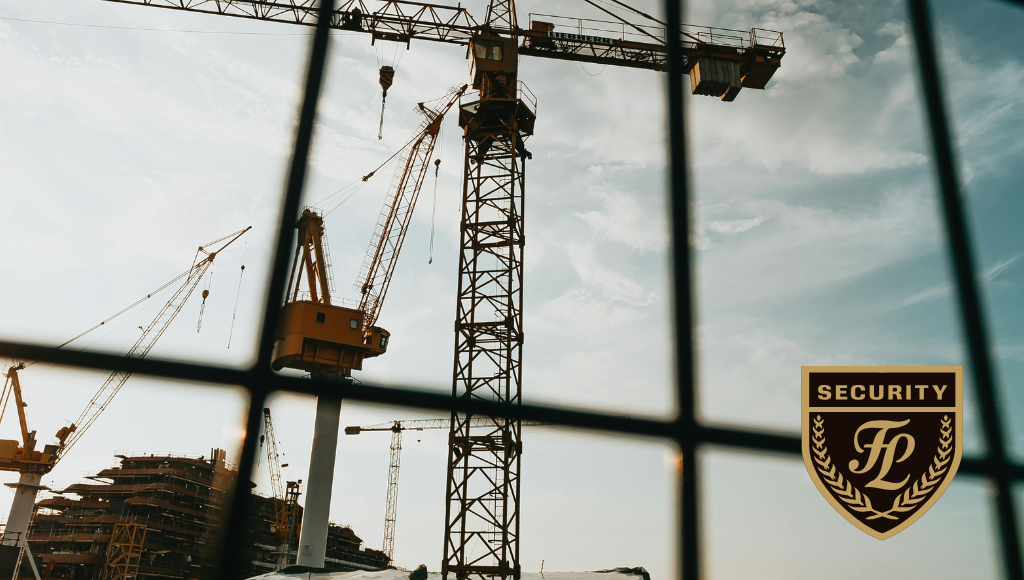
A construction site is not just an area with a fence, machinery, and materials. It is a place where people, deliveries, tools, valuable equipment, and often large financial investments are in constant movement every day. That is exactly why construction site security is not a luxury or an “extra add-on” — it is a practical necessity that helps protect a company from losses, delays, and unpleasant situations.
Theft, damage, unauthorized persons entering the area, unauthorized use of machinery, and chaos in access control can create serious complications. Moreover, the problem is often not only the stolen material itself. Losses also arise from work delays, additional deliveries, administrative burden, and reputational risks.
With a well-thought-out security plan, professional physical security, regular patrols, and smart access control, these risks can be significantly reduced.
Why Are Construction Sites High-Risk Areas?
Unsecured construction sites are especially attractive to thieves and unauthorized persons for several reasons. First, valuable materials are often stored there — metal, wood, electrical wiring components, tools, fuel, machinery, thermal insulation, finishing materials, and other goods.
Second, several subcontractors usually work on construction sites. This means that many people enter and leave the site, and it is not always easy to immediately understand who is an employee, who is a supplier, and who is a completely unauthorized person. Without clear control, this boundary becomes blurred.
Third, construction sites are often located in places where there are few people around outside working hours. In the evenings, at night, on weekends, and on public holidays, the area can become an easy target. If security is not provided on the construction site, the risk only increases.
That is why construction site safety and security should be planned before active work begins, not only after the first incident. As the saying goes — it is better to lock the door before, not after the horse has already run out of the stable.
The Most Common Security Risks on a Construction Site
Every site is different, but the main risks are often repeated in many places. They may seem everyday and ordinary, but if they are ignored, the consequences can be unpleasant.
The most common security risks on construction sites are:
- material and tool theft;
- damage to construction machinery or unauthorized use of it;
- fuel losses;
- unauthorized persons entering the area;
- vandalism;
- loss of documentation or equipment;
- uncontrolled access to warehouses and containers;
- violations of safety rules;
- conflicts between employees, subcontractors, or suppliers;
- accidents involving unauthorized persons.
Professional site security helps bring order to such situations. A security guard is not just a person standing at the gate. They can control movement on the site, record deliveries, monitor the area, and notice suspicious activity in time.
How Do Material Losses Occur in Construction?
Material losses in construction can occur for various reasons. Of course, theft is one of the most visible risks, but it is not the only one. Some losses also occur due to insufficient inventory control, poor warehouse organization, and weak supervision.
The most common causes of material losses:
- Insufficient access control
If almost anyone can enter the site, it is difficult to determine at what moment and why the materials disappeared. - Storage of materials in an open area
Unattended pallets, cables, metal structures, or tools are like an open invitation to thieves. - Unclear delivery flow
If it is not clearly recorded what was delivered, who accepted the cargo, and where it was placed, it is difficult to trace losses later. - Working with several subcontractors
The more people there are on the site, the more important control becomes. Without a unified system, misunderstandings and risks arise. - Weak supervision outside working hours
Many thefts happen exactly when there are no longer any workers on the site — in the evenings, at night, or on weekends.
This is where construction site security appears as one of the most effective solutions. If the area is monitored by physical security, patrols are carried out, and the movement of people is recorded, the risk of material losses becomes significantly lower.
Unauthorized Access to a Site: Why Is It Dangerous?
Sometimes construction site managers focus more on theft and think less about unauthorized persons entering the area. However, unauthorized access to a site can be just as serious a problem and may even increase the risk of theft.
An unauthorized person on a construction site can:
- steal materials or tools;
- damage machinery or structures;
- cause an accident;
- disrupt the work process;
- access documents or restricted areas;
- create legal and reputational consequences for the company.
A construction site is a high-risk environment. There are trenches, lifts, exposed structural elements, electrical connections, heavy machinery, and other potentially dangerous areas. If curious passers-by or people with malicious intent enter the area, the consequences can be serious.
That is why access control on a construction site is one of the foundations of security. A sign saying “No unauthorized entry” is not enough. A real system is needed that determines who is allowed to enter, when they are allowed to enter, and how this information is checked.
Physical Security on a Construction Site as a Preventive Solution
Physical security on a construction site works not only as a response mechanism, but also as a strong preventive tool. A visible security presence often deters potential offenders before they even attempt to enter the area.
The main duties of a security guard on a construction site may include:
- controlling the flow of people and vehicles;
- registering entry and exit;
- supervising deliveries;
- inspecting the territory;
- recording suspicious situations;
- promptly reporting to responsible persons;
- cooperating with the police or emergency services in the event of incidents;
- monitoring warehouses, containers, and machinery areas.
A well-trained security guard notices details that others may miss. For example, an unfamiliar vehicle near the site gate, a person without the appropriate access document, improper removal of cargo, or a damaged section of fencing.
In addition, security helps maintain order. Employees and suppliers know that movement is being controlled. This encourages discipline and reduces the “grey areas” where problems usually arise.
How Does Professional Site Security Help Reduce Costs?
Sometimes companies see security only as an additional expense. However, in practice, professional site security often helps save money. Why? Because it reduces unplanned losses.
Theft of materials is not just about the stolen goods. It can mean:
- purchasing the materials again;
- delays in work;
- downtime for teams;
- additional transport costs;
- shifts in project deadlines;
- the risk of contractual penalties;
- administrative explanations;
- tension in relationships with the client or customer.
If important materials or tools disappear, work can stop for several hours or even days. And in construction, time really is money. That is why security solutions often pay off not only directly, but also through a more stable project workflow.
Construction site security in Latvia is especially important during seasonal periods as well. For example, in winter, sites may be less active, but valuable materials may still be stored there. During the active construction season, on the other hand, the flow of people, deliveries, and machinery increases. In both cases, the security plan must be adapted to the situation.
Construction Site Security Starts with Risk Assessment
Before choosing a security solution, it is important to understand the risks of the specific site. A small renovation site in the city centre will have different challenges than a large industrial construction site outside a populated area.
A security assessment should usually take into account:
- the location of the site;
- the size of the territory;
- the condition of the fence, gates, and lighting;
- the value of materials and machinery;
- working hours;
- the number of subcontractors;
- the frequency of deliveries;
- nearby infrastructure;
- previous incidents;
- the required response time.
After such an assessment, it is possible to determine whether the site needs permanent physical security, night patrols, access control, video surveillance support, or a combination of several solutions.
It is important to understand — there is no universal solution. Security is not “one size fits all.” The more accurately the situation is assessed, the more effective the security will be.
Why Choose Feratum Life for Construction Site Security in Latvia?
Feratum Life helps companies that need professional, well-planned, and practical security on construction sites. The construction environment is dynamic, so security solutions must be flexible. On one day, active concrete work may be taking place on the site; the next day, deliveries; and a week later, finishing materials may be stored there. Each stage requires its own approach.
Feratum Life security solutions may include:
- physical security on site;
- territory patrols;
- access control;
- registration of people and vehicles;
- risk assessment;
- an individual security plan;
- response to incidents;
- cooperation with site management and responsible persons.
This type of cooperation allows the construction site manager to focus on organizing the work instead of constantly worrying about whether something will disappear during the night. A clear security system creates peace of mind, order, and predictability.
In addition, a professional approach helps not only protect materials, but also improve the overall management of the site. When it is known who enters, who leaves, where the most valuable materials are located, and how the territory is controlled, the project becomes easier to manage.
When Does a Construction Site Definitely Need Security?
There are situations where the need for security is especially high. For example, if expensive materials or machinery are stored on the site, if the territory is located in a remote area, or if incidents have already occurred in the past.
Security should definitely be considered if:
- valuable tools, materials, or machinery are located on the site;
- the territory is not fully fenced;
- many subcontractors work on the site;
- deliveries take place frequently;
- work is carried out in several shifts;
- the site has poor visibility or insufficient lighting;
- the construction site is located in an area with an increased risk of theft;
- control is needed outside working hours;
- the client requires security to be provided.
If even one of these points applies to your site, it is worth carrying out a security assessment. The sooner the risks are identified, the easier they are to prevent.
Frequently Asked Questions
Is construction site security also necessary for smaller sites?
Yes, smaller sites are often also exposed to the risk of theft and unauthorized access. A smaller site does not mean a lower risk of losses. If tools, materials, or machinery are located there, security can be very useful.
How does physical security on a construction site help reduce theft?
Physical security controls the movement of people and vehicles, monitors the territory, carries out patrols, and responds to suspicious situations. A visible security presence also acts as a preventive deterrent to offenders.
What is access control on a construction site?
It is a system that determines who is allowed to enter the site, when they are allowed to enter, and how this access is recorded. It may include access passes, visitor registration, vehicle control, and restricting access to certain areas.
Is territory patrolling necessary at night?
Yes, because many incidents happen outside working hours. Night patrols help detect damage, suspicious persons, attempts to enter the territory, or other risks in time.
How do you choose the right security solution for a construction site?
First, the site’s location, size, material value, working hours, delivery flow, and previous incidents must be assessed. After that, it is possible to determine whether physical security, patrolling, access control, or a combined solution is needed.
Conclusion: A Secure Construction Site Means Fewer Losses and More Control
In construction, every delay, every missing material, and every unexpected incident can be costly. That is why construction site security is an important investment in the company’s safety, project stability, and uninterrupted workflow.
Professional physical security on a construction site, well-planned access control on a construction site, regular territory patrols, and clear internal procedures help reduce material losses in construction and prevent unauthorized access to the site. As a result, the construction site becomes safer, more transparent, and easier to manage.
If you want to protect your construction site from theft, unauthorized access, and unnecessary losses, apply for a Feratum Life security consultation. Specialists will assess your site and recommend the most suitable solution — from physical security to patrolling and access control.
Security starts with one right step.
Contact us:
Mobile: +371 27788250
Email: feratum.life@inbox.lv, info@feratum.life