Home Blog
How does security help maintain order on business premises?
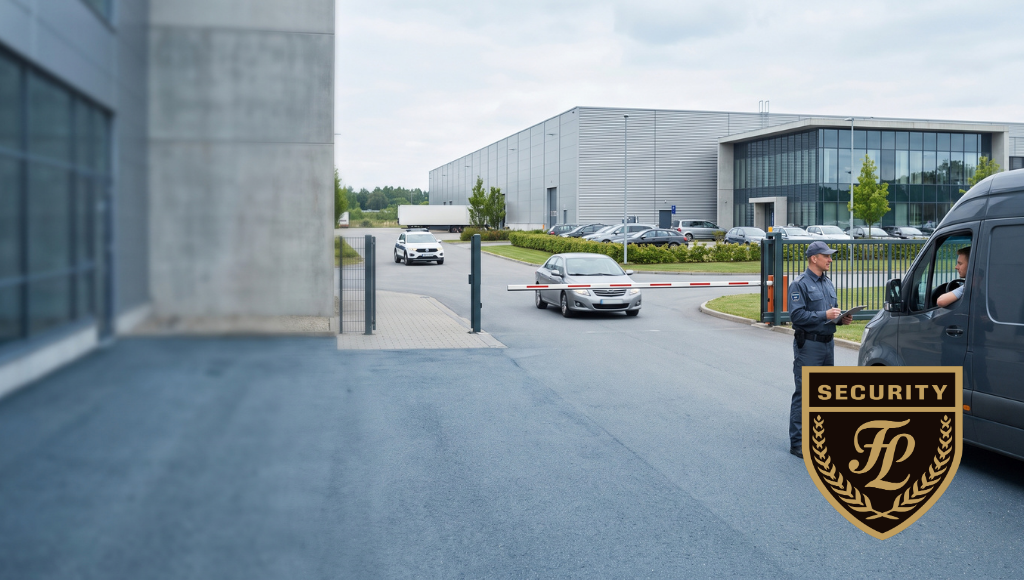
When people think about security, the first things that often come to mind are theft prevention, break-ins, or responding to an incident that has already occurred. In practice, however, the role of site security is much broader. Well-organised security helps businesses maintain day-to-day order, control the movement of people and vehicles, identify irregularities, and prevent problems before they become serious.
This is especially important on premises where employees, clients, suppliers, delivery vehicles, and business partners move around every day. The larger the site and the busier the traffic, the more difficult it becomes to supervise everything using only internal rules or CCTV cameras.
This is where on-site security and regular patrols play an important role. A security officer not only responds to breaches but also helps ensure that established procedures are followed and that everyone understands how to act in different situations.
The role of security extends beyond preventing theft
Dozens of minor situations may arise on business premises every day that do not initially appear to be security incidents.
For example, a vehicle may be parked where it should not be. A gate may be left open after a delivery. An unfamiliar person may enter the premises. An unknown vehicle may remain near a warehouse for an extended period. An employee or visitor may fail to follow the company’s rules for moving around the site.
Individually, these situations may appear insignificant. However, they can create both security risks and disruptions to business operations.
The presence of security personnel helps identify and address such situations immediately. Site security therefore becomes part of the company’s day-to-day operational management rather than merely a measure reserved for emergencies.
Controlling the movement of people on business premises
Many businesses receive not only employees but also suppliers, clients, service technicians, contractors, couriers, and other visitors every day.
If the site is large or contains several buildings, it can be difficult to determine who is authorised to enter a particular area and why they are there.
Security personnel can control access to the premises, register visitors, and, where necessary, confirm whom they have come to see.
This helps prevent situations in which an unauthorised person can move freely through a warehouse, production area, or another part of the business premises.
For example, if a security officer notices an unfamiliar person in an area where visitors should not be present, the situation can be checked immediately. Sometimes it may be a simple misunderstanding, but in other cases, a timely check can prevent theft, unauthorised access, or another incident.
Controlling vehicle access and movement
Monitoring vehicle movement is equally important.
Delivery vehicles, lorries, employee cars, and visitor vehicles regularly enter larger business premises. Without clearly organised controls, the site can quickly become chaotic.
Security personnel can monitor:
- which vehicles enter the premises;
- who is authorised to access the site;
- where vehicles should be parked;
- whether traffic restrictions are being followed;
- whether delivery vehicles proceed to the correct loading or unloading area;
- whether gates are closed after a vehicle leaves.
This type of control is particularly useful at logistics centres, warehouses, manufacturing facilities, and other sites with high volumes of vehicle traffic.
Maintaining order in company car parks
A car park may appear to be a relatively straightforward part of the premises, but situations that require supervision arise there regularly.
For example, vehicles may be parked in fire access routes, in front of gates, in areas designated for delivery vehicles, or in other places where they disrupt business operations.
If such problems are not addressed, employees and visitors may eventually conclude that the rules are merely formal and do not need to be followed.
The presence of security personnel helps maintain order. A security officer can identify an incorrectly parked vehicle, locate its owner, and ask for it to be moved.
Regular monitoring also serves as a preventive measure. People are much more likely to follow the rules when they know that the premises are being supervised.
Security on warehouse premises
Security is particularly important on warehouse premises because they often contain goods, raw materials, machinery, and other assets of value to the business.
However, the risks are not limited to theft.
Problems may also arise when unauthorised individuals enter warehouse areas, doors are left unlocked, gates remain open, or vehicles are parked in places where they obstruct loading and unloading operations.
Regular security patrols make it possible to check whether:
- warehouse doors are closed;
- gates are in the required position;
- no unauthorised individuals are present;
- no suspicious vehicles have been left near the warehouse;
- there is no visible damage to fences, gates, or other access points;
- there is no unusual or suspicious activity on the premises.
This approach helps identify problems before they develop into serious incidents.
Order and security at manufacturing facilities
At manufacturing companies, the role of security often involves not only monitoring the external premises but also ensuring compliance with specific internal procedures.
Manufacturing facilities may include areas accessible only to authorised employees. Vehicle movement may also be restricted, access permitted only at certain times, and special rules applied to visitors.
Security personnel can help ensure that these requirements are followed.
For example, if an unfamiliar vehicle or person is noticed on manufacturing premises outside working hours, the security officer has a clear responsibility to investigate the situation.
This does not mean that every irregularity is automatically a breach. What matters is that the situation does not go unnoticed.
Why are regular patrols so important?
CCTV cameras are a valuable security tool, but they cannot always fully replace physical inspections of the premises.
A camera only shows what falls within its field of view. Furthermore, not every situation is easy to identify on a monitor.
While patrolling the premises, a security officer can also notice details that cameras may not detect.
These may include a damaged fence, an unlocked door, unusual noises, an unfamiliar vehicle, an open gate, or a person present in an area where they should not be.
Regular patrols also create consistency and predictability. The areas to be checked, the order in which inspections should take place, and the actions required when an irregularity is identified can all be clearly defined.
From improvised responses to clear procedures
One of the most important benefits of security is the opportunity to establish clear response procedures within the company.
Without a predefined process, different employees may react very differently to the same situation.
For example, what should be done if an unfamiliar person is found on the premises outside working hours? Who should be notified if a gate is left open? What action should be taken if an unknown vehicle remains in the car park for an extended period? Who checks the warehouse doors at the end of the day?
Organising security operations makes it possible to establish a specific procedure for each of these situations.
This usually involves identifying the situation, carrying out the necessary checks, notifying the responsible person, acting in accordance with company rules, and documenting the event where necessary.
As a result, the company does not have to rely solely on chance or the initiative of individual employees.
The presence of security personnel also acts as a deterrent
A visible security presence can reduce the likelihood of breaches in itself.
If a security officer regularly patrols the premises, a potential offender knows that their actions may be noticed.
This applies to more than theft.
Employees, suppliers, and visitors are also more likely to follow site rules when they can see that compliance is being monitored.
Security therefore helps create an environment in which the rules are not merely written in a policy document but are followed in practice.
Does every company require permanent on-site security?
No. The security solution should be proportionate to the company’s specific risks, the size of its premises, operating hours, and everyday processes.
Some sites may reasonably require permanent on-site security around the clock. For others, scheduled patrols by a mobile security team may be sufficient.
In many cases, the most effective solution is a combination of several security measures.
When assessing the required level of security, it is worth considering the following questions:
- Are valuable goods, materials, or machinery regularly kept on the premises?
- Are the premises left empty outside working hours?
- Do external suppliers and visitors frequently enter the site?
- Is there a high volume of vehicle traffic?
- Have there previously been incidents involving theft, vandalism, or unauthorised access?
- Are there areas that require restricted access?
- Does someone need to check gates, doors, fences, and other access points regularly?
The more often the answer to these questions is yes, the more likely it is that the business requires systematic site security.
Permanent on-site security
Permanent on-site security is generally suitable for sites where continuous supervision is required.
This may be relevant at large manufacturing facilities, warehouse complexes, logistics centres, or businesses with high volumes of vehicle and pedestrian traffic.
In such cases, a security officer remains on-site during specified hours or around the clock.
The main advantage is the ability to respond to situations immediately while also carrying out routine monitoring duties.
Patrols at scheduled times
Not every site requires a security officer to be present permanently.
Sometimes the greatest risks arise at particular times, such as during evenings, nights, or weekends.
In these situations, regular security patrols may be a practical solution.
During each patrol, predefined locations and assets are inspected. This may include checking gates, doors, fences, car parks, warehouses, and other critical areas.
This approach helps maintain control of the premises without requiring a permanent security post.
A combined security solution
For many businesses, the most suitable solution is to combine on-site security, CCTV, alarm systems, and access control.
For example, during working hours, a security officer may control the movement of people and vehicles. At night, the premises may be monitored using CCTV and alarm systems supported by periodic patrols.
This approach allows security resources to be used where they are genuinely needed.
It is important to remember, however, that technology alone cannot resolve every security issue. It works best when there is a clearly defined procedure establishing who will respond to the information received and how they will act.
How should a business choose the most suitable site security model?
Before choosing a particular solution, it is useful to conduct a security assessment of the business premises.
Attention should be paid to the size of the site, access points, vehicle flow, operating hours, valuable assets, previous incidents, and areas with an increased level of risk.
Day-to-day operational issues should also be analysed.
The company may not have experienced any serious thefts, but gates may regularly be left open. Vehicles may be parked in unauthorised areas. Unauthorised individuals may occasionally be present on the premises outside working hours.
These situations are equally important because they reveal where the current level of control is insufficient.
A security solution should not only help the company respond to the worst possible scenario. It should also improve order in everyday operations.
Frequently asked questions
What does site security do on a daily basis?
Site security personnel may control the entry of people and vehicles, monitor access to designated areas, patrol the premises, check gates and doors, ensure compliance with the company’s internal rules, and respond to suspicious situations.
Can CCTV completely replace on-site security?
Not always. CCTV is extremely useful, but a camera cannot approach an unfamiliar person, close a gate that has been left open, or inspect a suspicious vehicle. At many sites, the most effective solution is a combination of technical security systems and on-site personnel.
How often should business premises be patrolled?
This depends on the size of the premises, level of risk, operating hours, and the nature of the company’s activities. Some sites require regular patrols several times during the day or night, while others may only need inspections at specific high-risk times.
When is permanent on-site security necessary?
Permanent security is generally beneficial when a site has high volumes of pedestrian or vehicle traffic, valuable assets, restricted-access areas, or an elevated level of security risk.
How can a company determine whether patrols alone would be sufficient?
The company should assess how often situations arise that require immediate human involvement. If the greatest risks occur outside working hours and there is no continuous activity on-site, regular patrols combined with technical security systems may be sufficient.
Conclusion: orderly processes are part of security
The importance of security on business premises begins long before a theft or another serious incident occurs.
Day-to-day monitoring, regular patrols, supervision of pedestrian and vehicle movement, and compliance with internal rules help a company create an orderly and predictable environment.
Regular attention to seemingly minor irregularities — open gates, unauthorised individuals, incorrectly parked vehicles, or suspicious activity — often helps prevent far more serious problems.
When assessing business security, it is therefore worth asking not only, “What will happen if someone tries to steal something?” but also, “Who monitors whether everything on our premises is operating as intended each day?”
The answer to this question will help determine whether the company would benefit most from permanent on-site security, patrols at specific times, or a combined security solution. The main objective is to ensure that security is adapted to the actual situation and helps not only to respond to incidents but also to maintain order every day.
Contact us:
Mobile: +371 27788250
Email: feratum.life@inbox.lv, info@feratum.life